
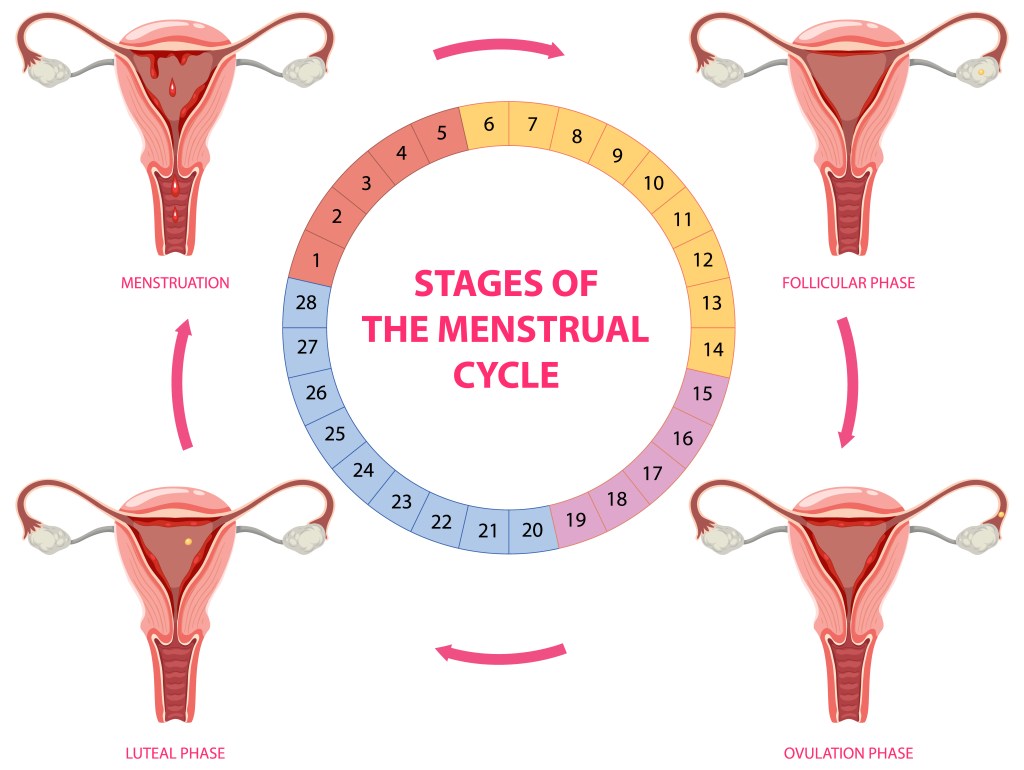
The menstrual cycle is a natural and essential process that prepares the female body for pregnancy. It typically lasts between 21 and 35 days and consists of four phases: menstrual, follicular, ovulation, and luteal. Knowing these phases helps women manage their health, fertility, and emotional well-being.
The menstrual cycle is a remarkable sign (Aya) of Allah’s omnipotence and wisdom, reflecting the intricate process by which He prepares the body for the creation of life. It is a reminder of one of humanity’s main purposes: habitation and cultivation of the earth (‘Imarat Al-Ard) notably through procreation.
For Muslims Understanding this cycle is not only beneficial for health but also essential for fulfilling religious obligations, as it reflects the Taharah states, which are connected to key acts of worship like Salah (prayer) and Syam (fasting).
Here’s an overview of the four phases of the menstrual cycle:
1. Menstrual Phase
The menstrual phase is the first step of the cycle, and it begins when the uterine lining sheds, leading to menstruation/period. This occurs due to a drop in estrogen and progesterone levels, signaling that the previous cycle’s egg was not fertilized. The shedding of the uterine lining is accompanied by bleeding, usually lasting 3 to 7 days. This phase can cause symptoms such as cramps, fatigue, and mood swings.
2. Follicular Phase
The follicular phase begins on the first day of menstruation and continues until ovulation. During this time, the pituitary gland releases follicle-stimulating hormone (FSH), prompting the ovaries to develop follicles. One dominant follicle matures, increasing estrogen levels and thickening the uterine lining to prepare for a potential pregnancy. This phase symbolizes renewal and growth as the body prepares for the possibility of conception.
3. Ovulation Phase
Ovulation occurs around the middle of the cycle when a surge in luteinizing hormone (LH) triggers the release of a mature egg. This egg travels through the fallopian tube, where it remains viable for fertilization for about 12 to 24 hours. This is the most fertile phase of the cycle, and many women may notice physical signs such as increased cervical mucus and a slight rise in basal body temperature.
4. Luteal Phase
Following ovulation, the empty follicle transforms into the corpus luteum, which releases progesterone to maintain the uterine lining. If fertilization does not occur, the corpus luteum breaks down, leading to a drop in hormone levels. This hormonal decline causes premenstrual symptoms such as mood swings, bloating, and fatigue. If pregnancy occurs, progesterone continues to support the uterine lining, preventing menstruation.
Conclusion
Understanding and tracking your menstrual cycle helps you understand your body’s patterns, manage symptoms, and identify irregularities. It can also assist in family planning and detecting health issues.
In addition, for Muslim women, understanding and tracking their menstrual cycle is also important for fulfilling their religious obligations appropriately.
Afifa App helps Muslim women manage both these health and faith aspects related to their menstrual cycle.
Image designed by Freepik
 Afifa app
Leave a comment